
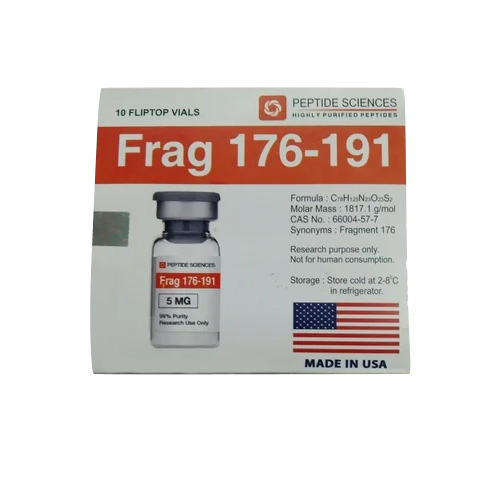
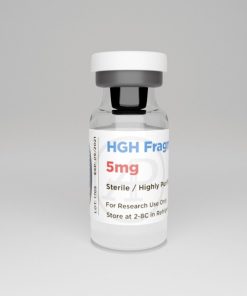
HGH-176-191 (Fat Loss) 5mg – Apoxar


52 $
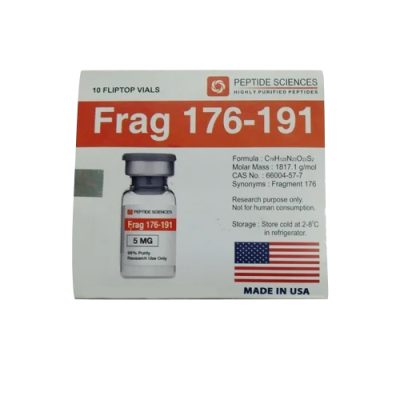 Peptide HGH-176-191 is used by those who struggle to lose weight in the traditional ways. There are a lot of controversial opinions about this drug: some say that it helps in fighting with atrophy of adrenoreceptors in adipose tissue, some that it doesn`t work this way. Despite these disputes we are sure that the drug WORKS as a good way to lose weight.
Here is what is can also give you:
- increased muscle mass;
- Stimulates the IGF-1 production process;
- Fast action without side effects;
- Increased energy for better workouts;
- Body rejuvenation.
HGH-176-191 is relatively cheap and it is easy to fake it. There are dozens of fake copies on the market made by malicious sellers and underground labs to gain money from desperate people. We are nothing like that. HGH-176-191 Apoxar is the purest compound on the market, we have a certificate from an independent lab that can prove it. We took care of your health and our reputation and never tried to fake components or sell something else instead of ordered compounds.
HGH 176-191: A Complete, Science-Based Guide
Introduction to HGH 176-191
HGH 176 191 often comes up in conversations about fat loss, body composition, and modern peptide research. Many people hear the name and immediately associate it with human growth hormone. That connection is not wrong, but it is incomplete. HGH 176 191 is not full growth hormone. Instead, it is a specific fragment designed to focus on one primary function: fat metabolism.
Interest in HGH 176 191 grew because researchers wanted the benefits of growth hormone without its broader systemic effects. Full HGH influences muscle growth, organ size, insulin sensitivity, and recovery. While those effects can be useful, they also come with risks. Therefore, scientists explored whether a smaller fragment could isolate the fat-burning properties while minimizing unwanted outcomes.
That idea led to HGH 176 191. Over time, it gained attention in research circles and among fitness-focused audiences. However, confusion still surrounds what it actually does, how it works, and what the science really says. This guide clears that confusion.
Here, you will find a clear, educational breakdown of HGH 176 191. The focus stays on biology, research, potential benefits, limitations, and safety awareness. The goal is understanding, not hype.
What Is HGH 176-191?
HGH 176-191 is a modified fragment of human growth hormone. Specifically, it consists of amino acids 176 through 191 from the full 191–amino acid HGH molecule. Researchers identified this region as being strongly associated with fat metabolism.
Unlike full HGH, this fragment does not significantly stimulate growth-related pathways. That distinction matters. Growth hormone interacts with multiple receptors throughout the body. HGH 176 191, however, was designed to reduce that broad interaction and focus more narrowly on adipose tissue.
In simpler terms,HGH 176 191 is not meant to build muscle or increase height. Instead, it was developed to study fat breakdown and fat storage inhibition. Because of this targeted design, it became interesting for obesity research and metabolic studies.
It is important to understand that HGH 176 191 is a research peptide. It is not approved as a general medical treatment. Much of the available information comes from laboratory studies and controlled research environments rather than widespread clinical use.
How HGH 176-191 Works in the Body
To understand HGH 176 191, you must first understand how fat metabolism works. Fat cells store energy as triglycerides. When the body needs energy, it breaks these triglycerides down into free fatty acids. This process is known as lipolysis.
HGH 176 191 appears to influence this process in two key ways. First, it may promote lipolysis, encouraging the breakdown of stored fat. Second, it may reduce lipogenesis, which is the process of creating new fat stores. These two actions work together.
Unlike full growth hormone, HGH 176 191 does not strongly affect insulin-like growth factor 1 (IGF-1). That matters because IGF-1 drives many growth-related effects and side effects. By avoiding this pathway, HGH 176 191 aims to remain metabolically focused.
Additionally, this peptide does not appear to significantly raise blood sugar levels in research settings. That characteristic made it especially interesting to scientists studying obesity and metabolic health.
The Science Behind HGH 176-191
Scientific interest in HGH 176-191 started when researchers observed that certain regions of the HGH molecule controlled fat metabolism more than growth. Through structural analysis, amino acids 176–191 stood out.
Animal studies showed promising results. Subjects receiving this fragment experienced reduced fat mass without the same growth effects seen with full HGH. Furthermore, these effects appeared independent of IGF-1 stimulation.
However, it is essential to remain grounded. While early research looked encouraging, large-scale human clinical trials remain limited. Much of the data comes from controlled laboratory studies rather than long-term population studies.
Therefore, while the mechanism is biologically plausible, conclusions should remain cautious. Science supports the concept, but it does not yet provide definitive answers for all populations.
HGH 176-191 vs Full Growth Hormone
Many people confuse HGH 176-191 with traditional HGH. Although they share a name, their actions differ significantly.
Full HGH:
-
Influences muscle growth
-
Affects bone density
-
Impacts organ growth
-
Raises IGF-1 levels
-
Alters insulin sensitivity
HGH 176-191:
-
Focuses on fat metabolism
-
Minimizes growth-related pathways
-
Shows limited IGF-1 stimulation
-
Targets adipose tissue more selectively
Because of these differences, HGH 176-191 is often discussed separately from growth hormone therapy. One is broad and systemic, while the other is narrow and specialized.
Potential Benefits of HGH 176-191
The primary area of interest for HGH 176-191 is fat loss research. Scientists have explored several potential benefits.
First, it may support fat breakdown. By encouraging lipolysis, it could help reduce stored body fat under controlled conditions.
Second, it may limit new fat storage. By inhibiting lipogenesis, it could slow the accumulation of additional fat.
Third, it appears less likely to cause water retention compared to full HGH. This distinction matters in research focused on body composition.
That said, benefits should always be viewed through a scientific lens. These effects are not guaranteed, and individual responses vary.
Limitations and Realistic Expectations
HGH 176-191 is not a magic solution. It does not replace nutrition, physical activity, or metabolic health. Fat loss still depends on energy balance, hormonal regulation, and lifestyle factors.
Moreover, research peptides do not work in isolation. Studies often involve controlled diets, monitored activity levels, and precise conditions. Real-world results may differ.
Another limitation is data availability. Without large human trials, long-term effects remain unclear. Therefore, expectations should remain conservative and informed.
Safety Considerations and Research Status
Safety remains a key topic when discussing HGH 176-191. Because it is not approved for general medical use, standardized safety guidelines do not exist.
Research settings monitor biomarkers, metabolic markers, and physiological responses closely. Outside of those settings, such monitoring may not occur.
Potential concerns include unknown long-term effects, variability in purity, and lack of regulatory oversight. Therefore, education and caution matter.
Understanding the research-only status of HGH 176-191 is essential. Information should be used for learning, not assumption.
HGH 176-191 and Weight Management Research
Researchers studying obesity have long searched for ways to target fat without harming lean tissue. HGH 176-191 fits into that exploration.
Unlike stimulants that affect the nervous system, this peptide works through metabolic signaling. That approach may reduce certain risks while introducing others.
Still, weight management remains complex. Hormones, behavior, sleep, stress, and nutrition all interact. No peptide overrides those fundamentals.
Myths and Misunderstandings About HGH 176-191
Several myths surround HGH 176-191.
One common myth claims it builds muscle. Research does not support that claim. This fragment focuses on fat, not hypertrophy.
Another myth suggests it works instantly. Fat metabolism changes take time, even under ideal conditions.
Finally, some assume it is identical to HGH. As explained earlier, that assumption is incorrect.
Clearing these misconceptions helps keep expectations realistic.
Lifestyle Factors That Influence Fat Loss More Than Peptides
Even in research contexts, lifestyle factors remain dominant. Nutrition quality, calorie balance, sleep, and physical activity drive most results.
Peptides may influence pathways, but they do not override poor habits. Consistency matters more than complexity.
Understanding this hierarchy prevents disappointment and misinformation.
Ethical and Regulatory Perspective
HGH 176-191 exists in a gray area. It is widely discussed in research, yet not approved for general treatment.
Regulatory agencies evaluate substances based on safety, effectiveness, and public health impact. Until more data exists, HGH 176-191 remains primarily a research subject.
This status reinforces the importance of education over promotion.
Future Research Directions
Future studies may explore:
-
Long-term metabolic effects
-
Human clinical outcomes
-
Optimal therapeutic contexts
-
Safety profiles over extended periods
As science evolves, understanding will improve. Until then, conclusions should remain cautious and evidence-based.
Conclusion
HGH 176-191 represents a focused attempt to isolate the fat-related actions of growth hormone. Its design highlights how precise molecular science has become. Rather than stimulating whole-body growth, this fragment aims to influence fat metabolism specifically.
Research suggests potential benefits in fat breakdown and fat storage reduction. However, limitations remain. Human data is limited, long-term effects are not fully understood, and lifestyle factors still dominate results.
Approached as an educational topic, HGH 176-191 offers insight into modern metabolic research. It reminds us that no compound replaces healthy habits, informed decisions, and respect for science.
Frequently Asked Questions (FAQs)
1. Is HGH 176-191 the same as human growth hormone?
No. It is a specific fragment designed to focus on fat metabolism rather than growth.
2. Does HGH 176-191 build muscle?
Research does not support muscle-building effects. Its focus is fat-related pathways.
3. Why is HGH 176-191 studied instead of full HGH?
Researchers wanted fat-related effects without broad growth-related actions.
4. Is HGH 176-191 approved for medical use?
It is primarily considered a research peptide and is not broadly approved for medical treatment.
5. Can HGH 176-191 replace diet and exercise?
No. Nutrition, activity, sleep, and lifestyle remain the primary drivers of fat loss
HGH-176-191 PEPTIDE OVERVIEW
HGH 176 191 is quite famous among women and can be used in a stack with other compounds for cutting. It can’t give you huge muscle gains like anabolic steroids, but it has other benefits:
- Unlike other drugs it doesn`t increase your metabolism, thus not giving you higher temperature and constant sweating;
- HGH-176-191 is not anabolic, so it doesn’t suppress your natural testosterone levels and doesn`t have side effects;
- It consists of more than 200 amino acids making it work and work fast.
HGH-176-191 Benefits:
- Actively reduces body fat;
- Side effects free;
- Increases muscle mass;
- Pharm-grade quality;
- 3rd party lab-tested, independent check
Be the first to review “HGH-176-191 (Fat Loss) 5mg – Apoxar”
Related products
HGH - Growth Hormone
HGH - Growth Hormone
HGH & Pertides

HGH - Growth Hormone
HGH - Growth Hormone
HGH & Pertides
HGH & Pertides
Reviews
There are no reviews yet.